
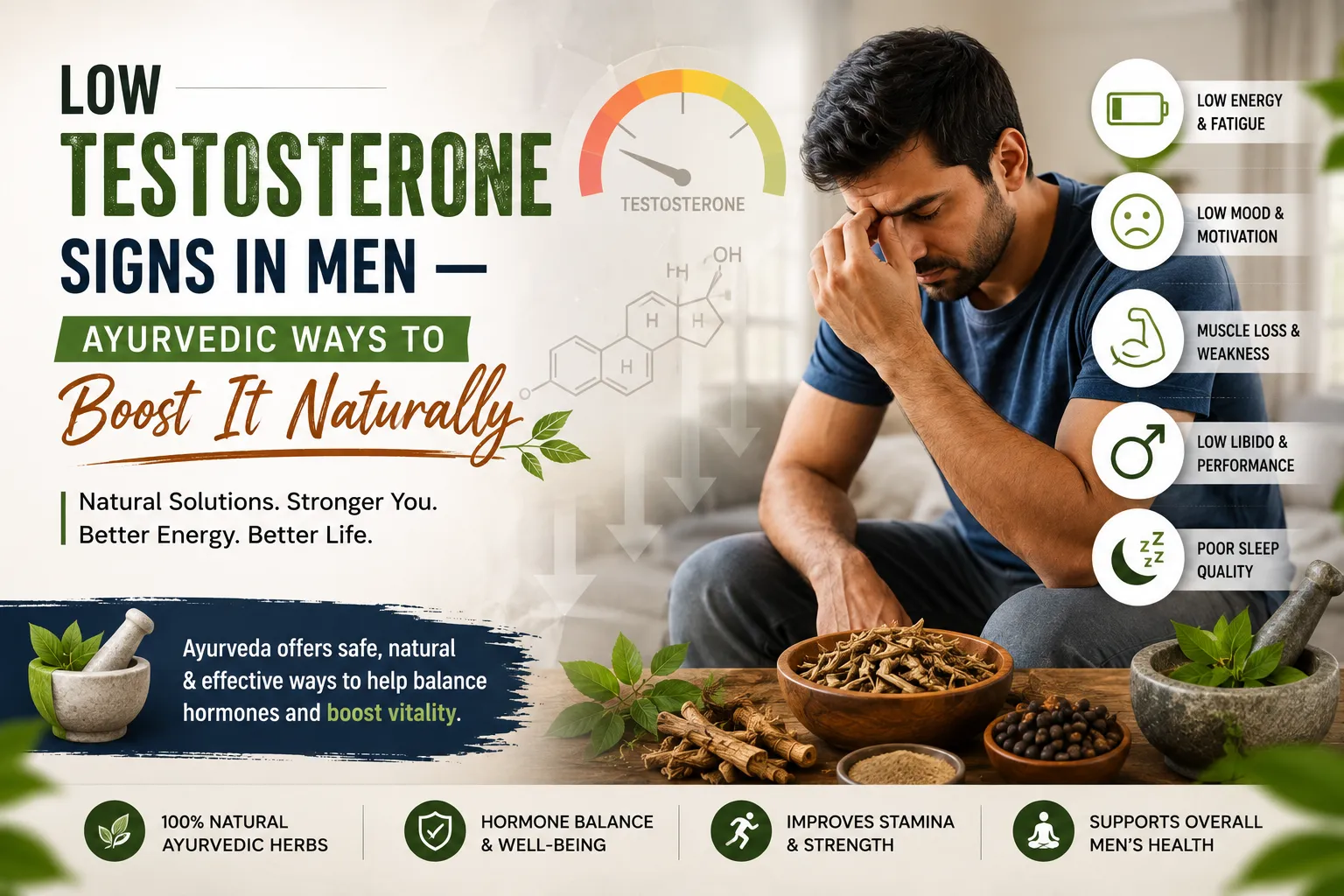
Low testosterone in men can cause fatigue, low libido, muscle loss, and mood changes. Low testosterone ayurvedic treatment using herbs like Shilajit, Ashwagandha, Safed Musli, and Kaunch Beej has been traditionally used for centuries to support healthy testosterone levels naturally — without the side effects of synthetic hormone therapy.
After age 30, testosterone levels in men decline by approximately 1–2% every year. By the time most men realise something is off — the fatigue, the belly fat, the low drive — their levels may have been declining silently for years. According to WHO, sexual and hormonal health challenges in men are significantly underreported and undertreated globally.
The good news: Ayurveda has a dedicated system — Vajikarana therapy — specifically designed for men’s hormonal and reproductive health. This guide covers the signs, causes, and proven Ayurvedic approaches to support healthy testosterone naturally.
What Is Testosterone and Why Does It Matter for Men?
Testosterone is the primary male sex hormone produced in the testes. It governs far more than just sexual function — it regulates muscle mass, bone density, fat distribution, red blood cell production, mood, cognitive sharpness, and overall energy levels.
Testosterone peaks in a man’s late teens and early 20s. From age 30 onwards, it declines by 1–2% per year — a slow process that most men don’t notice until the cumulative drop becomes significant. Lifestyle factors like chronic stress, poor sleep, processed food, and sedentary living can accelerate this decline significantly faster than age alone.
10 Warning Signs of Low Testosterone in Men
These symptoms often appear gradually — which is why many men attribute them to “ageing” or “stress” and ignore them for years:
Constant fatigue & low energy
Tired even after 8 hours of sleep
Reduced sex drive (libido)
Little to no interest in sexual activity
Difficulty building muscle
Gym results plateau despite training
Increased belly fat
Fat accumulates especially around the abdomen
Mood swings & irritability
Unexplained anxiety, frustration, or sadness
Brain fog & poor focus
Difficulty concentrating or remembering
Hair loss or thinning
Scalp hair thinning or body hair loss
Reduced bone density
Increased fracture risk, joint weakness
Poor sleep quality
Insomnia or waking up feeling unrefreshed
Low sperm count
Fertility challenges or reduced sperm quality
If you experience 3 or more of these symptoms consistently, a testosterone check with your doctor is advisable. Note: these symptoms can also indicate other conditions — clinical testing is the only way to confirm low testosterone.
What Causes Low Testosterone in Men?
- Poor diet and nutrient deficiency — Zinc, Vitamin D, and healthy fats are essential for testosterone synthesis. Deficiencies directly impact production.
- Chronic stress — Cortisol (the stress hormone) directly suppresses testosterone. High-stress lifestyles are one of the biggest drivers of early testosterone decline in Indian men.
- Lack of sleep — 70% of daily testosterone is produced during deep sleep. Consistently sleeping under 6 hours cuts production dramatically.
- Sedentary lifestyle — Physical inactivity reduces the hormonal signals that trigger testosterone production.
- Excess alcohol or smoking — Both directly damage Leydig cells — the testosterone-producing cells in the testes.
- Age-related decline — Natural but manageable with the right lifestyle and supplementation strategy.
What Does Ayurveda Say About Low Testosterone?
Ayurveda does not use the term “testosterone” — but it describes the same concept through Shukra Dhatu, the seventh and most refined of the seven body tissues (Sapta Dhatus). Shukra Dhatu governs reproductive vitality, strength, confidence, and sexual energy in men.
When Shukra Dhatu is depleted — through stress, poor diet, overexertion, or age — a man experiences exactly what modern medicine calls low testosterone: fatigue, reduced libido, muscle weakness, and mood imbalance. Ayurveda calls this state Kshaya (depletion) and addresses it through a dedicated therapeutic system called Vajikarana — Ayurveda’s branch specifically for men’s sexual and reproductive health.
Vajikarana therapy uses specific Rasayana herbs — adaptogens and aphrodisiacs — that nourish Shukra Dhatu, reduce cortisol (Pitta excess), and restore Ojas — the body’s vital life force linked to immunity, stamina, and vitality. This is the ancient Ayurvedic framework behind every herb in this guide.
6 Ayurvedic Herbs That Naturally Support Testosterone
1. Shilajit (Asphaltum)
Testosterone + EnergyShilajit is Ayurveda’s most potent Rasayana — a Himalayan mineral resin rich in Fulvic Acid and 85+ trace minerals. It directly stimulates Leydig cells (testosterone-producing cells) and enhances mitochondrial ATP production for sustained energy.
A 90-day randomised, double-blind, placebo-controlled trial (PubMed ID: 26395129) in men aged 45–55 showed statistically significant increases in total testosterone, free testosterone, and DHEA levels with purified Shilajit supplementation — confirmed by Pandit et al., West Bengal University of Health Sciences.
2. Ashwagandha (Withania somnifera)
Cortisol → TestosteroneAshwagandha is Ayurveda’s most studied adaptogen for male hormonal health. Its withanolides lower cortisol levels — and since cortisol directly suppresses testosterone production, reducing it allows testosterone to rise naturally. The KSM-66 extract is the most clinically validated form, showing improvements in testosterone, sperm quality, and muscle strength in multiple human trials.
3. Safed Musli (Chlorophytum borivilianum)
Vajikarana + StaminaA classical Vajikarana herb, Safed Musli is known as “Indian Ginseng” for its effect on male reproductive health. It supports testosterone production, sperm count, libido, and physical stamina. Rich in saponins, it nourishes Shukra Dhatu directly — making it a cornerstone of Ayurvedic men’s health formulations.
4. Kaunch Beej (Mucuna Pruriens)
Dopamine → TestosteroneKaunch Beej is rich in L-DOPA — a direct precursor to dopamine. Higher dopamine levels signal the pituitary gland to release more Luteinising Hormone (LH), which in turn directly stimulates testosterone production. Studies also show positive effects on sperm motility and reproductive health, making it a dual-action Vajikarana herb.
5. Gokshura (Tribulus terrestris)
LH StimulationGokshura works upstream of testosterone production by stimulating Luteinising Hormone (LH) — the pituitary hormone that signals the testes to produce testosterone. It also supports urinary tract health, libido, and cardiovascular function. A well-documented Ayurvedic herb with modern research support for male vitality.
6. Akarkara (Anacyclus Pyrethrum)
Nerve health + VitalityLess known but highly effective — Akarkara is a traditional Vajikarana herb that improves nerve sensitivity, sexual performance, and male vitality. Its alkaloids stimulate the reproductive system and have shown aphrodisiac properties in preclinical studies. Often combined with Shilajit and Safed Musli in premium Ayurvedic formulations.
Lifeyco Products That Support Healthy Testosterone Naturally
Lifeyco Herbal offers two targeted Ayurvedic products for men dealing with low testosterone, low energy, and compromised vitality:
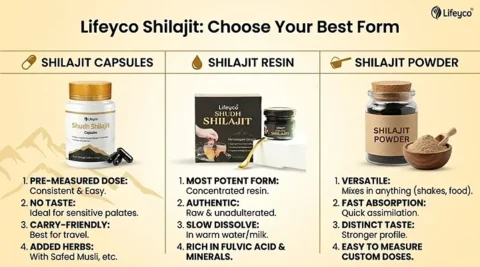
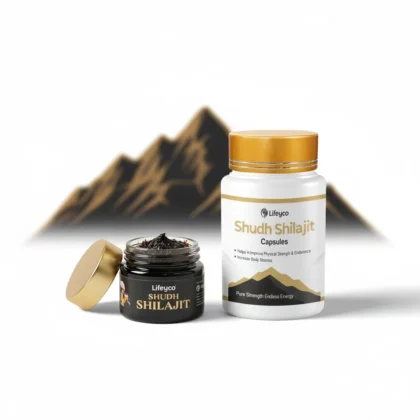
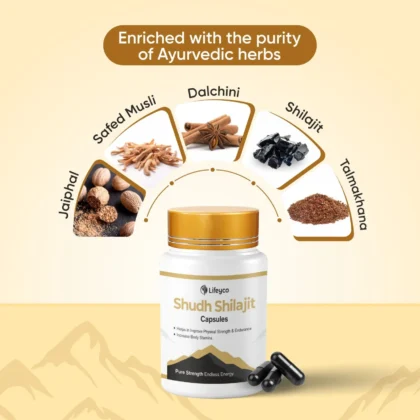
Lifeyco Shudh Shilajit Capsules
- Pure Himalayan Shilajit with Fulvic Acid
- Safed Musli, Kaunch Beej, Akkarkara
- Lab-tested, Shodhana-purified
- GMP Certified · 30 capsules
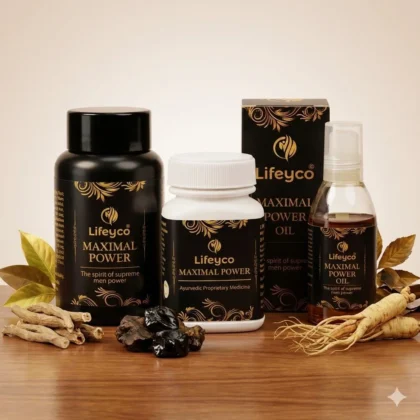
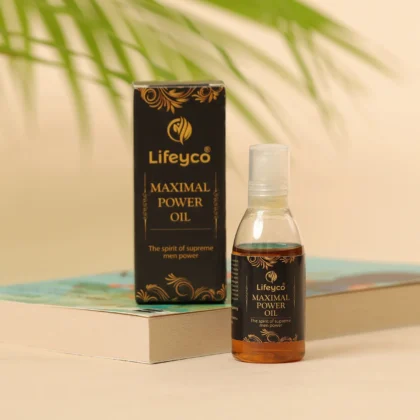
Lifeyco Maximal Power Tablet
- Safed Musli, Kaunch Beej, Shilajit combo
- Complete Vajikarana herb formula
- Designed for men’s stamina & vitality
- Ayurvedic formulation · Natural
Lifestyle Changes That Amplify Testosterone Results
Ayurvedic herbs work best as part of a complete lifestyle strategy. These six changes will significantly amplify your results:
- ✓Sleep 7–8 hours nightly — 70% of testosterone is produced during deep sleep. Poor sleep is the single biggest lifestyle suppressor of testosterone.
- ✓Strength training — Weight lifting and resistance training are clinically proven to boost testosterone within hours of a session. Prioritise compound movements.
- ✓Reduce stress daily — Meditation, pranayama, or even 20-minute walks reduce cortisol — directly allowing testosterone to rise.
- ✓Cut sugar and ultra-processed food — These raise insulin and cortisol, both of which suppress testosterone. Replace with whole foods, healthy fats, and protein.
- ✓Get enough Vitamin D — Sunlight exposure or a Vitamin D supplement. Low Vitamin D is strongly correlated with low testosterone in Indian men.
- ✓Eat zinc-rich foods — Pumpkin seeds, nuts, legumes, and eggs. Zinc is directly required for testosterone synthesis in the testes.
How Long Does It Take to See Results?
Ayurvedic herbs for low testosterone ayurvedic treatment are not overnight fixes — they work cumulatively and sustainably. Here is what to realistically expect:
Also Read on Lifeyco
- Shilajit for Men’s Health — Testosterone, Energy & Stamina Complete Guide
- Shilajit and Ashwagandha Together — Benefits, Dosage & Is It Safe?
- Shilajit Capsules vs Resin vs Powder — Which Form Is Best for You?
- Best Shilajit Capsules in India 2026 — Honest Comparison
📚 Sources & Research References
- Pandit S, et al. Clinical evaluation of purified Shilajit on testosterone levels. Andrologia, 2016. PubMed ID: 26395129 ↗
- Wankhede S, et al. Ashwagandha supplementation on muscle strength and testosterone — RCT. PubMed, 2015. PubMed ID: 26609282 ↗
- WHO. Male Sexual Dysfunctions — Global Fact Sheet. who.int ↗
- WebMD. What Is Testosterone? webmd.com ↗
- Wikipedia. Vajikarana — Ayurvedic Therapy for Reproductive Health. Wikipedia ↗
Ready to Support Your Testosterone Naturally?
Lifeyco ke dono products — clinically-backed Ayurvedic herbs, lab-tested, GMP certified — designed specifically for men’s hormonal health and vitality.
Lifeyco Shudh Shilajit Capsules
Shilajit + Safed Musli + Kaunch Beej · 30 capsules · Lab-tested
Lifeyco Maximal Power Tablet
Complete Vajikarana formula · Stamina & male vitality
New customer? Use code WELCOME10 for 10% off your first order.
Disclaimer: This article is for informational purposes only and does not constitute medical advice. Low testosterone is a medical condition — always get a clinical diagnosis from a qualified doctor. Ayurvedic supplements mentioned are dietary supplements, not medicines, and are not intended to diagnose, treat, cure, or prevent any disease. Research references are linked for transparency. Consult your healthcare professional before starting any new supplement, especially if you are on medication.
FAQ
Can low testosterone be increased naturally?
Haan. Lifestyle changes aur Ayurvedic herbs jaise Shilajit, Ashwagandha, aur Safed Musli ke through healthy testosterone levels ko naturally support kiya ja sakta hai. Clinical studies confirm Shilajit significantly increases total testosterone in 90 days. Consistent daily use of 3–6 months gives the best results.
How does Shilajit help with low testosterone?
Shilajit mein Fulvic Acid hota hai jo testosterone-producing Leydig cells ko stimulate karta hai. Andrologia journal ki 2016 study (PubMed ID: 26395129) mein 90 days mein 45–55 age ke men mein total testosterone, free testosterone, aur DHEA mein significant increase dekha gaya.
At what age does testosterone start declining?
Generally 30 ke baad har saal 1–2% decline hoti hai. Lekin chronic stress, poor sleep, processed food, aur sedentary lifestyle ise aur tez kar sakte hain — kuch men 25 ke baad bhi low testosterone symptoms face karte hain.
Are Ayurvedic testosterone boosters safe?
Haan. Natural Ayurvedic herbs generally safe hain jab sahi dose mein liya jaye. Lekin agar koi medical condition hai (thyroid, BP, prostate) ya medication chal rahi hai to doctor se consult zaroor karein pehle.
How long should I take Shilajit for testosterone?
Minimum 8–12 weeks consistent use recommended hai. Best results ke liye 3–6 months tak lena chahiye. Clinical trials mein bhi minimum 90 days ka measurement window use kiya jaata hai.
Can I take Shilajit and Ashwagandha together?
Haan. Ye combination safe aur effective hai. Shilajit directly testosterone stimulate karta hai; Ashwagandha cortisol reduce karta hai — dono ek doosre ke effects ko complement karte hain without any known interactions.z